Translate

Showing posts with label GOJAGE. Show all posts

Friday, May 26, 2023

Milano Conference by Eliante and GOJAGE

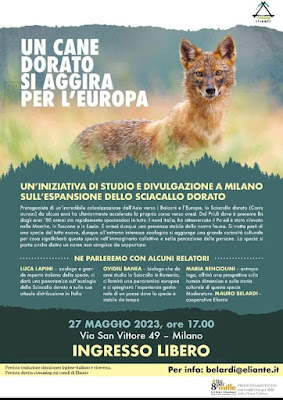
Un cane dorato si aggira per l’Europa 

Larynx of the Golden Jackal, Estonia 28.03.2013


Photo: Tea Oacheș


by Eliante (news)

ONLINE EVENT IN FACEBOOK HERE

Un’iniziativa di studio e divulgazione a Milano sull’espansione dello Sciacallo dorato.

27 maggio 2023, ore 17:00
Via San Vittore 49, Milano
Ingresso libero

Un nuovo carnivoro si affaccia in Italia e in Europa, grazie ad un processo di espansione del tutto naturale: si tratta dello Sciacallo dorato (Canis aureus), che grazie alle sue notevoli capacità di adattamento sta colonizzando nuove aree ad una velocità davvero sorprendente.
Probabilmente, nei prossimi anni sentiremo parlare sempre più spesso di questa specie, per questo, Eliante ha organizzato un’iniziativa di studio e divulgazione rivolta sia a specialisti che al grande pubblico, che prevede la realizzazione di un opuscolo informativo e di un convegno. In quest’ultimo, biologi, zoologi e antropologi offriranno una prospettiva sulle caratteristiche di questa specie, sulla sua espansione in Italia e in Europa, e sugli aspetti sociali e culturali ad essa legati.


Presentation Maria Benciolini, Eliante Italia 

Presentation Luca Lapini, GOJAGE Italia

Presentation Ovidiu C. Banea, GOJAGE Romania

Mauro Belardi moderated last Saturday a conference on Golden Jackal distribution in Italy and Europe where anthropologist Maria Benciolini (Eliante), zoologist Luca Lapini (NHM Udine), and environmental ecologist Ovidiu Banea (Crispus NGO Sibiu) discussed on public attitude and perception of people towards golden jackal, the distribution of #Canisaureus in Europe and Italy, and evolution of population dynamic of the golden jackal in our regions.
In the end, two models of conservation were discussed from the perspective of total culling with harvest quotas overpassing 85% in Romania, which drives more and more densities and stock assessment (This year in Romania are planned to be killed 24.000 specimens from 28.000 which are alive) and from the perspective of total conservation as in Italy, where the species is fully protected by Law 92 (This year in Italy the Golden Jackal reached a total number of less than 300-350 individuals).

First Golden Jackal was shot in Italy in 1984, and one-year later reproduction was proven, while in Romania, the first reproduction of the last dispersion was proved at Negureni, in South Dobrudja in the same year (1984).

Why the evolution of the Golden Jackal population is so different in these two countries remains unknown, but one thing came to light, now: The aggressive attitude and hunting are discussable for their effectiveness while the conservation of territorial groups with dominant pairs seems to show constant densities at the local level.

Friday, April 28, 2023

Golden jackal and public awareness in Italy and Romania

New events on the horizon after the 3rd International Jackal Symposium in Gödöllő, Hungary (here) and the World Jackal Day in Austria (here)

Since 1984 when jackals were reported in Italy and Romania, their population reached, officially, a total number of 28.871 individuals in Romania while the Italian population is less than 800-1.200 individuals.

Why? Which is the difference?


Save the dates! 

Cluj-Napoca (RO), Carbonera TV (IT), Milan MI (IT)


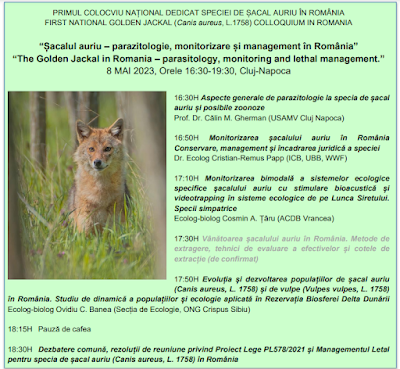
Cluj-Napoca, Cluj County, Romania, 8th of May 2023, 16:30H The Institute of Biological Research, Republicii Street, Nr 48 (Program here).

Secția de Ecologie a ONG Crispus Sibiu, WWF România, Institutul de Cercetări Biologice Cluj-Napoca și ACDB Vrancea cu sprijinul Facultății de Biologie și Geologie, Secția Ecologie Sistemică și Conservare (Universitatea Babeș-Bolyai) și al Facultății de Medicină Veterinară (Universitatea de Științe Agricole și Medicină Veterinară Cluj-Napoca) organizează:

PRIMUL COLOCVIU NAȚIONAL DEDICAT SPECIEI DE ȘACAL AURIU ÎN ROMÂNIA

FIRST NATIONAL GOLDEN JACKAL (Canis aureus, L.1758) COLLOQUIUM IN ROMANIA

“Șacalul auriu – parazitologie, monitorizare și management în România”

“The Golden Jackal in Romania – parasitology, monitoring and lethal management.”

RO: Reuniunea va avea loc la Sediul Institutului de Cercetări Biologice, Strada Republicii Nr 48, Cod Postal 400015, în ziua de 8 mai 2023 la ora 16:30, Locuri limitate. Înscrieri de alte prezentări, cu durată de maxim 10 minute, se primesc până la data de 4 mai prin email.

EN: The meeting takes place at The Institute of Biological Research (Address: Republicii Street 48, Cluj-Napoca, Romania). Other presentations (no more than 10 minutes) can be submitted until Thursday, 4th of May 2023 to the following email addresses: crispusngosibiu(at)gmail.com or cpapp(at)wwfdcp.ro. Limited places.

Responsabili eveniment: Ovidiu-Constantin Banea (Crispus Sibiu) și Cristian-Remus Papp (ICB, UBB, WWF) Foto: Alexandra Ion


Photo: Alexandra Ion


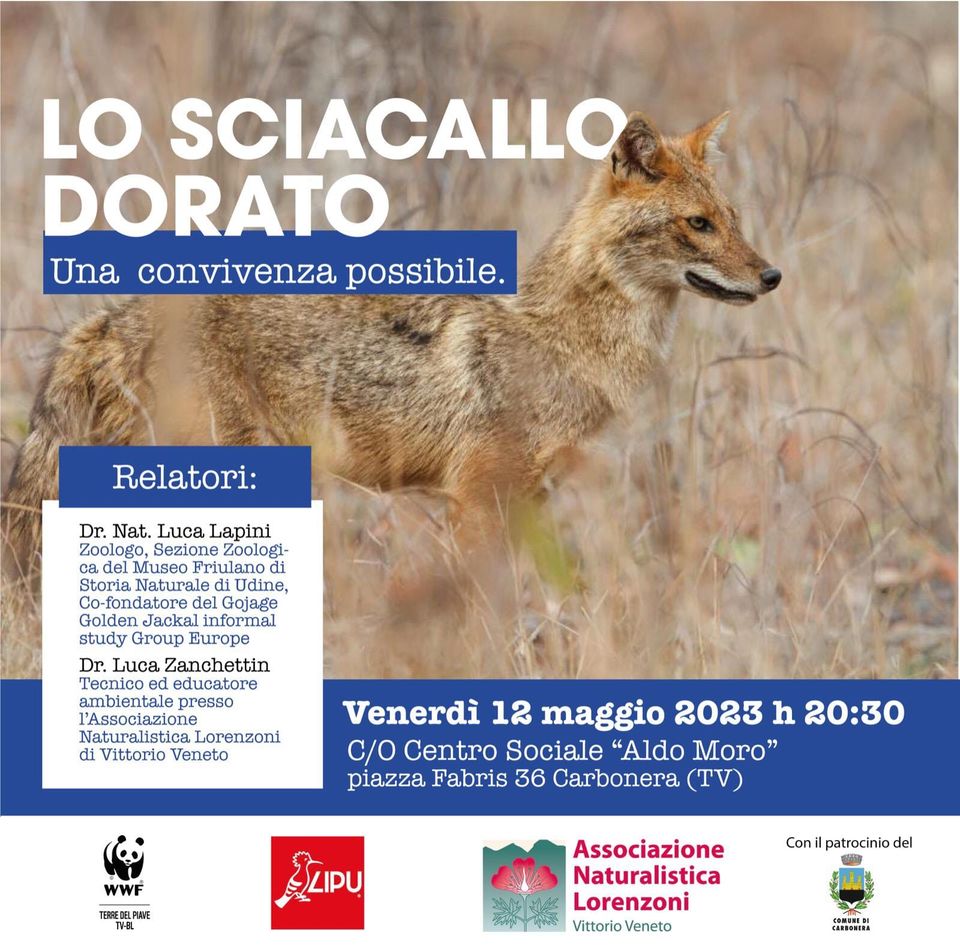
Carbonera, Veneto Region, Italy, 12th of May 2023, 20:30H Centro Sociale "Aldo Moro", Piazza Fabris, Nr 36

"Venerdì 12 maggio 2023, ore 20:30 si svolgerà la conferenza "Sciacallo dorato. Una possibile convivenza" presso il Centro Sociale "Aldo Moro" a Carbonera. Relatori dott. Luca Lapini, zoologo, Sezione Zoologica del Museo Friulano di Storia Naturale di Udine e dott. Luca Zanchettin, tecnico ed educatore ambientale presso l'Associazione Naturalistica Lorenzoni."


Milano, Lombardia, Italy, 27th of May 2023, 17:30H Via San Vittore, Nr 49 (here)


The last pulsation and dispersal of the golden jackal from the known range of the southeastern part of the Balkan Peninsula started in the 50s and in 1984, the first jackals were recorded in Italy and Romania. 

The fake news and hunters' aggressive attitude against jackals is posing species threats in Central and Eastern European Countries by inducing an erroneous perception to society with such a level that Game Management Authority started to lose control and common sense, elaborating lethal management plans with harvest quotas of more than 80% of the existing population (i.e. Romania). Italy remains a model of human - jackal Cohabitation! In Italy, the golden jackal remains a strictly protected species. The holistic approach to jackal conservation and management includes public awareness. Check ✅ for knowledge and science before management!
Be with us!

Luca Lapini and Ovidiu C. Banea

GOJAGE
28.04.2023

Friday, July 26, 2019

Jackals in Finland, just 4 degrees below the Arctic Circle

Finland and "The Battle of the Jackal" - GOJAGE News

A message to GOJAGE community and to Finland Environmental Board


by Ovidiu C. Banea & Giorgos Giannatos

Reykjavik, 26th of July 2019


Letter from Dr Suvi Viranta addressed to GOJAGE members

26th of July 2019:


Dear GOJAGE members,

They have, or at least this one individual has, arrived to Finland. Below is a photo taken from a car in Eno, Karjala, Eastern Finland.

Best regards,
Suvi

---------------------
Thank You, Suvi!

Thank you for coming to The Battle of the Jackal in Marathon Bay, Attica, Greece during the 2IJS organized by Dr Giorgos Giannatos, last November 2018.
Thank you for your scientific work in the field of jackals! 

Ovi & Giorgos


THE NEWS (the picture) in Finland!

GOJAGE NEWS

On 26th of July 2019 Dr Suvi Viranta-Kovanen announced GOJAGE members the first sighting of the golden jackal in Finland. She works at University of Helsinki as a Senior Lecturer in Anatomy at Faculty of Medicine and Adjunct Professor in Paleobiology at Faculty of Science.

In 2015, we thought that jackals arrived to Karup, Denmark via Finland and Sweden or directly crossing the frozen Baltic Sea. Who knows how they arrived to Denmark? It was Dr Miklós Heltai, (the future director of the 3rd International Jackal Symposium, to be held in Gödöllő, Hungary in 2022) who announced the great news of Jackals in Denmark in September 2015.

Suvi is GOJAGE Responsible and Representative in Finland since she was participating at the 2nd International Jackal Symposium in Greece in November 2018 when she was one of the speakers during "The Battle of the Jackal" with her work "Rediscovering the African Wolf" presented in Marathon Bay, Greece, Attica after 2508 years from "The Battle of Marathon". It was about jackals and African wolves during the "Taxonomy" Session of the 2nd International Jackal Symposium


Dr. Nikolai Spassov from NHM Sofia, Bulgaria supported the fact that a wolf-jackal (Canis "lupaster") appears to exist in North Africa from the late Pleistocene. He followed: "However, remains the question: is there a golden jackal (C. aureus or more specific African jackal C. anthus?) together with it in Africa? (Spassov, 2018).

Dr Patricia D Moehlman from Tanzania Wildlife Research Institute (Tawiri) names this species African golden jackal (Moehlman et al, 2018) and convinced everybody that they are jackals.

Suvi & "The Battle of the Jackal" 

in Finland


"The Battle of the Jackal" moved now to Finland since Suvi works internationally with molecular sequencing to assess African wolf distribution in Africa, which remains uncertain due to confusion regarding possible co-occurrence with the Eurasian golden jackal. Canis lupaster differs from all other Canis spp. including the golden jackal in its cranial morphology, while phylogenetically it shows close affinity to the Holarctic grey wolf.


Golden Jackal in European Union, 

Legal framework applicable to Finland

Annex Va and VI from the EU Habitats Directive

From Hatlauf et al, 2016, GOJAGE E-Bulletin

The golden jackal (​Canis aureus) is a ​Community Interest species​ ("Habitats Directive"92/43/EEC) listed in Annex V a together with pine marten (​Martes martes​), European polecat (​Mustela putorius​) and chamois (​Rupicapra rupicapra​). Monitoring of conservation status is an obligation arising from Article 11 of the Habitats Directive for all habitats (as listed in Annex I) and ​species​ (as listed in ​Annex​ II, IV and ​V​) of Community interest.
Consequently, this provision is not restricted to Natura 2000 sites and data need to be collected both in and outside the Natura 2000 network to achieve a full appreciation of the conservation status.
The main results of this monitoring need to be reported to the Commission every six years according to Article 17 of the directive. Article 14 places a requirement for further surveillance of exploited species of flora and fauna listed in Annex V where necessary. Only after monitoring and scientific reports to the Commission, management measures can be assessed. When management measures are applied in case of ​Community Interest species ​like the golden jackal or chamois a series of hunting methods should be avoided. These hunting methods which are​prohibited are listed in the Annex VI of the "Habitats Directive" 92/43/EEC. 


In 2015, when Jackals were first sighted in Denmark

The Battle of  the Jackal in Finland

It is mandatory to know how to communicate with the Finish Scientific Community and the Finish people. We will be ready to inform that the jackals are omnivorous species with an opportunistic behavior and that they arrived using the natural pathways and that they did not harmed (yet) the protected biota in any natural reserve of this planet Earth and that they maintain decent numbers in other new settled areas without exponential grow. They are not Invasive Alien Species.

Jackals have to be monitored in Finland even better than in other countries and policies of management have to start only after the accurate monitoring of this species which remains fragile and have to fight differently for its survival in these boreal biogeographic regions. In Estonia the depredation and the interaction with other con-generics like Red fox is more aggressive as shown by Peep Männil, our Representative in Estonia in a video during the 2IJS in Greece. Together with Mrs Kaja Lotman and Mr Aleksei Lotman from Matsalu NP they could start in a correct way and understanding the complex management of the jackal species.

GOJAGE fully supports Dr Suvi Viranta-Kovanen to represent our informal community and to help for the conservation efforts of the golden jackal in Finland. We are ready to plan our first Bio Acoustic Monitoring survey in the region of Karjala, where the first jackal species sighting to Finland was recorded with the aim to assess the time and the size of this new European golden jackal species cluster, the northernmost in the world.


Prof. Emerit. Heikki Henttonen explaining jackal sighting and the first report of the jackal in Finland to the local media MTV Uutiset in Finnish.

Eno, Karjala, is a municipality with 6,891 inhabitants located in Eastern Finland at Latitude: 62° 48' 18.40" N and a Longitude: 30° 09' 15.19" E.
Canis aureus is now just 4° close to the Arctic Circle.

Welcome to Finland!
We hope soon you will arrive to Iceland.


Dear Suvi!

We hope to see you again in Hungary in 2022 for the 3IJS (3rd Jackal International Symposium).

Or sooner? near Eno, Karjala during the first Finnish jackal B.A.M. survey!
You have our support and all that you need to help the jackal survive in such an environment!


It seems, that we need a boat...
Best regards,


Ovidiu C. Banea & Giorgos Giannatos
with our colleagues from
2IJS Organizing Committee


Thank you again for all your efforts to join the 2IJS! Good luck with the new friend!

Jackal Ecology Task Force (JET-F) supports you and Professor Emeritus Heikki Henttonen!


Giorgos Giannatos (Greece)
Wildlife Biology, PhD
Department of Biology, National and Kapodistrian University of Athens
BIOSFAIRA NGO
Contact: ygiannatos@gmail.com

Ovidiu Constantin Banea (Romania)
Ecology-Biology BSc, Essential and Applied Ecology MSc
NGO Crispus Sibiu, Ecology Department
GOJAGE Co-Founder
Contact: ovidiubanea@gmail.com


Wednesday, April 5, 2017

Jackals are collared in Serbia

Movements and home range territory studied with use of GPS collars in Serbia


by Duško Ćirović, Aleksandra Penezić
Department of Animal Ecology and Geography, University of Belgrade, Serbia

On 12th of March 2017 GOJAGE Serbia announced that a pair of golden jackals (male and female) were collared at the edge of an urban area of Belgrade. Jackals were collared with GPS collars (GPS/GSM on male, GPS/radio on female) collars. University of Belgrade, Department of Animal Ecology and Geography


Photos credit: Duško Ćirović, Aleksandra Penezić

Photo credit: Duško Ćirović, Aleksandra Penezić

Thursday, March 21, 2013

BALTICA 2013, Wildlife Survey in W Estonia

During 27-29th of March, an international team will perform a wildlife survey, Baltica 2013, in western Estonia. The team includes Biologist Peep Männil, Centre of Forest Protection and Silviculture Tartu, Estonia, Biologist Alex Lotman, Environmentalist from Läänemaa county, and Ovidiu Banea, Environmental Ecologist, NGO Crispus Sibiu, Romania. The main purpose of this survey is to evaluate Matsalu National Park Reserve environment in winter conditions. During 2 days survey, the team will try to analyse the ecological network of those systems.
 JETF Wanax II, Summer 2012 and Baltica 2013 Winter Survey Proposal W Estonia

GOJAGE Minor 2013, survey in Turkey and Georgia was delayed due to administrative reasons.

Saturday, November 10, 2012

Paradis (RAJ 2012) jackal survey in Croatia GOJAGE 2

During first days, Raj 2012 team worked mainly on southern part of the Peljesac Peninsula. After three days the entire surface were surveyed and calling stations were installed systematically.
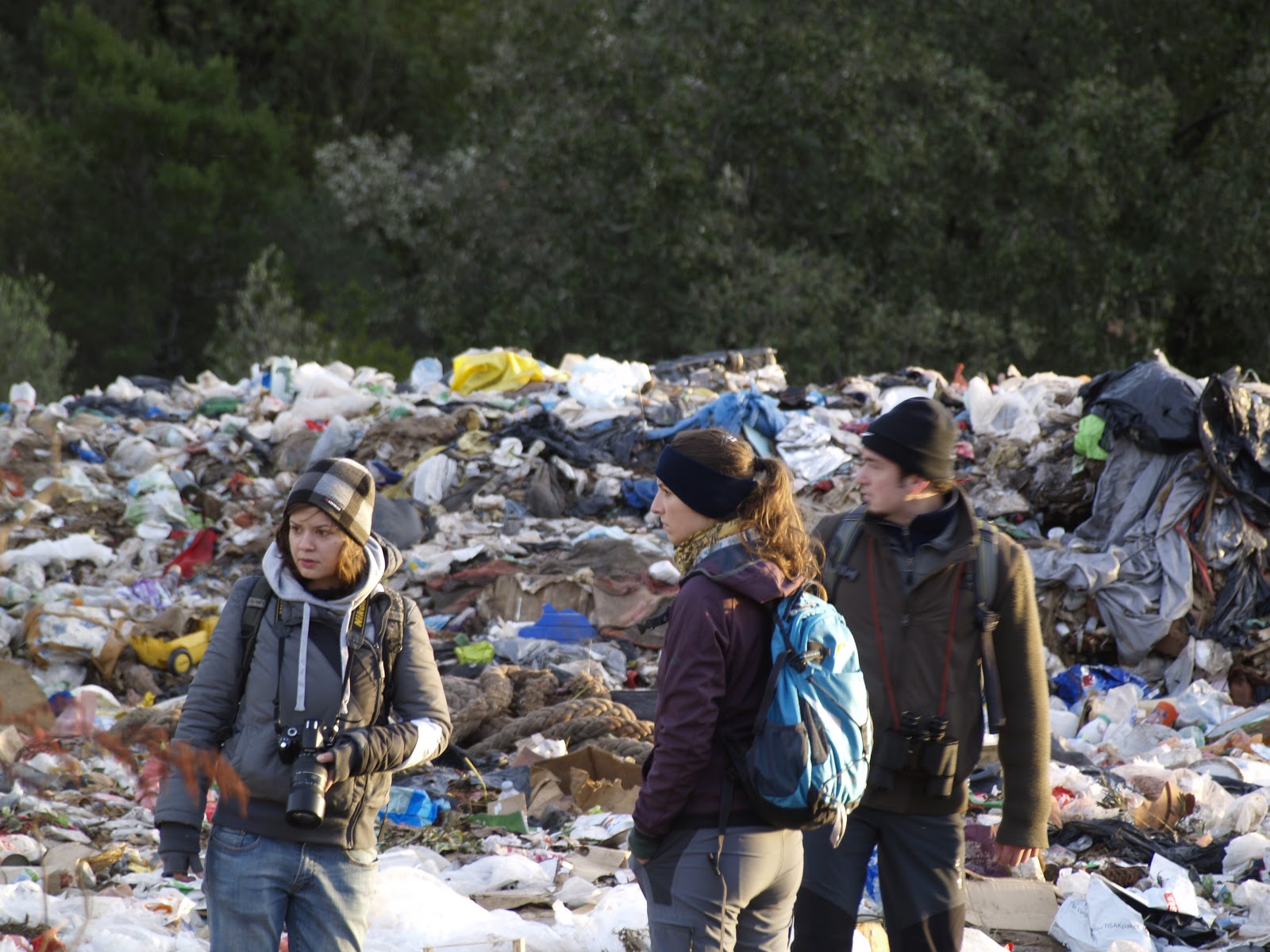
The golden jackal seems to be human dependent and here, near a village with a bad managed waste dump inside Peljesac Peninsula,  we were able to record more than 18 individuals simultaneously with Giannatos technique of bio-acoustic stimulation. Also a common pheasant Phasianus colchicus, was seen in this environment during this "concert". This event let us suggest that predation on this game ground nesting bird species by jackals is not so aggressive as is suggested for its other competitor, red fox (Draycott et al, 2008).

Silence on the blue lagoon

Looking for key species

Seems that we found them

Photo and video trapping is essential as direct method

A spider treats ignorance and controls all data. Lejla Colic

Specific habitat (1)

Not jackal footprint

Specific trail
Golden jackal footprint

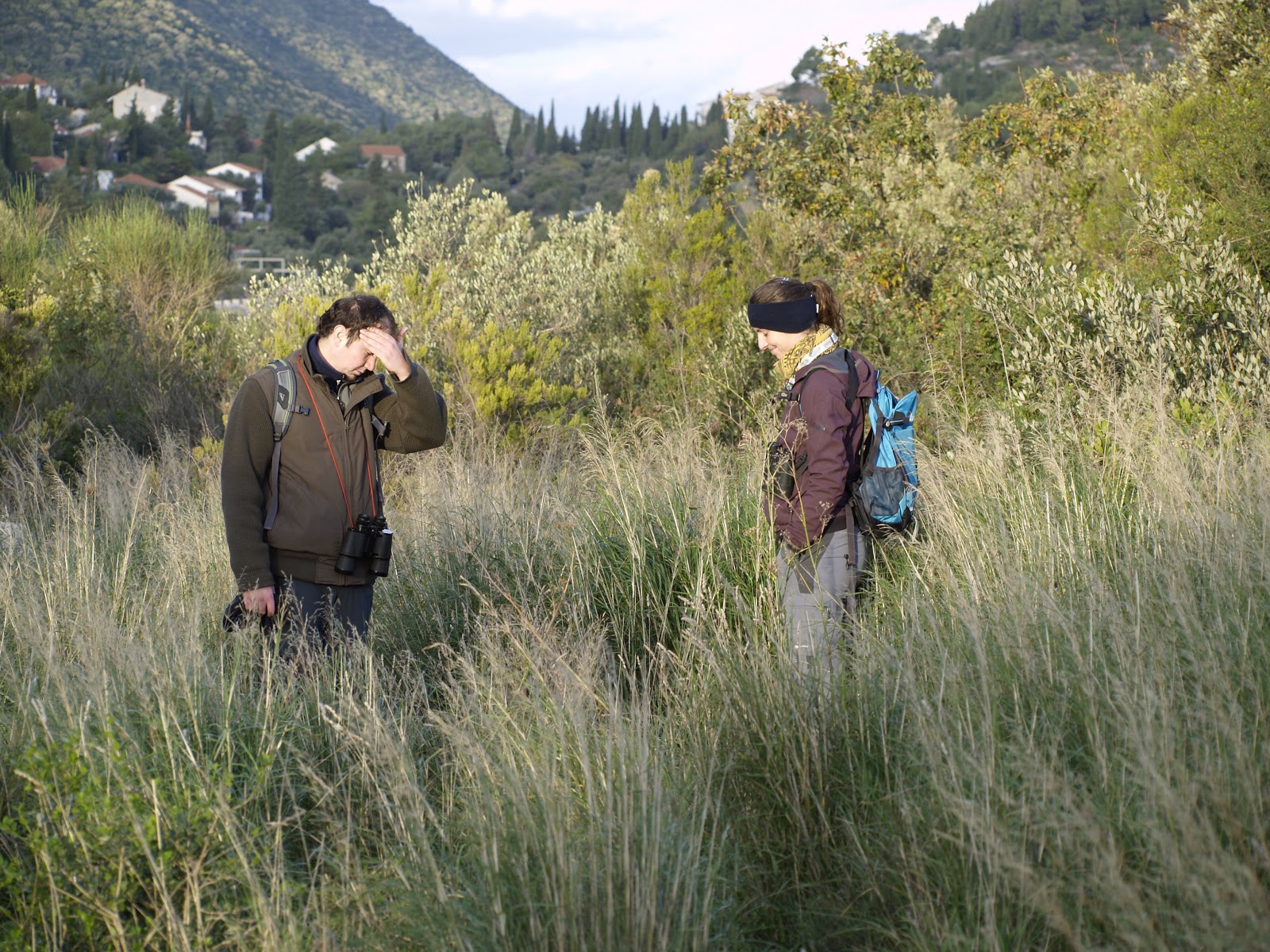
Fieldwork

Beside localizing more than 20 reproductive groups of jackals, the members of jackal survey team were able to identify dormouse (Glis glis), Eagle Owl (Bubo bubo) and red fox (Vulpes vulpes). 
The beautiful calcareous landscape and Mediterranean vegetation above the blue sky and with the blue waters of the Adriatic Sea surrounding us and the wonderful people ambiance and hospitality from Zuljana got us awake trough all night, and so, we could  feel better the jackal ecological systems painted with their musical howls.
Hunting is a common activity in Peljesac

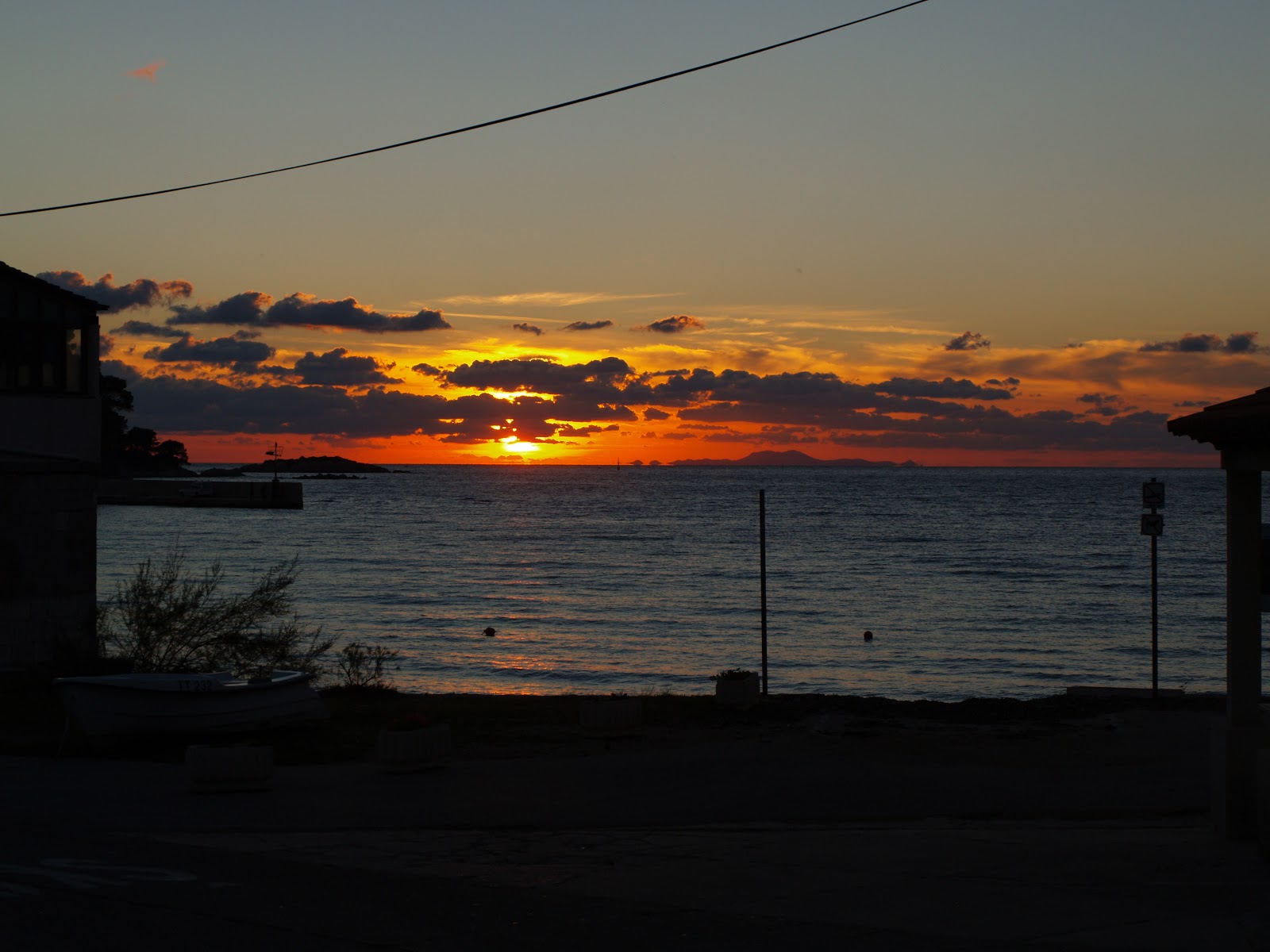
Before fieldwork, sunset at Zuljana our wonderful base camp

Ivan Budinski(BIOM NGO) shows us how lichens do not grow where animals mark. Below the cement protection on curve to the continental part of the Peninsula at about 600 meters altitude a lot of droppings (mustelids, carnivores, raptor birds) can be easy seen and are a good encyclopaedic, visual compendium. Photo: Ovidiu Banea

The corner is giving us the most important data.
Glis glis Photo: O. Banea

Sus scrofa on the road

Preparing the fieldwork in Zuljana, on the left Ivana, Miha and Ivan: to the right Mateja, Jasna and Tomaz are understanding everything behind the message.

Possible footprint of Canis aureus in Peljesac

Following the jackal path

We are not jackals but we want understand their movements

Specific habitat (2)


Droppings

Lynx Miha

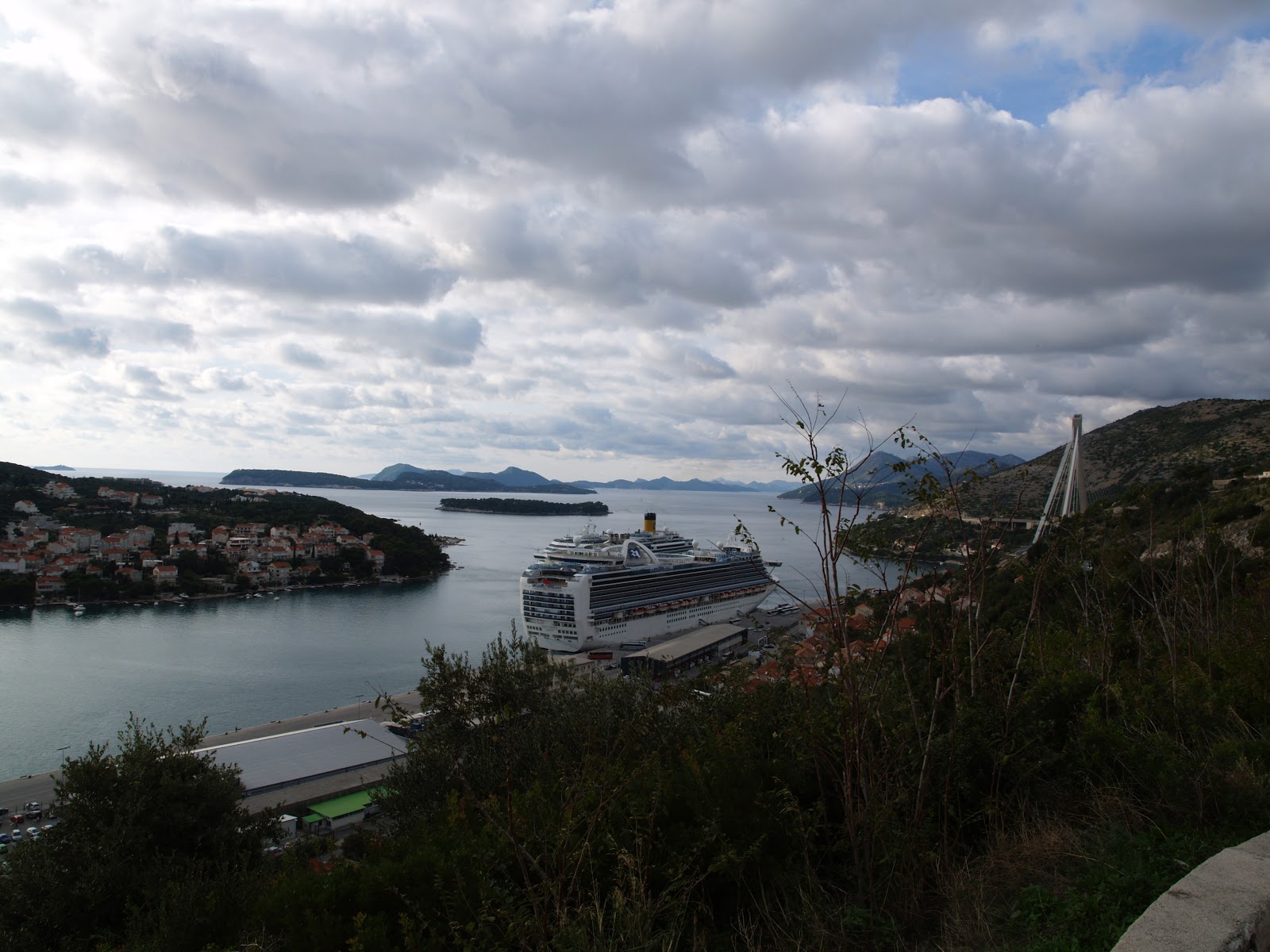
During the day we went to Dubrovnik, the islands are still without anthropogenic touch. 


One of several stops. In fact, not time schedule is need for jackal surveys.

Dubrovnik

Sunset in Dubrovnik

Miha Krofel and Ivana Selanec

Raj 2012 team starts for day fieldwork

Stomach collected from a young female road-killed. 
Ivana's team did recognition of the specimen at the place in Northern Part of the Peninsula.


It had 75% vegetable (60% Graminae, scrub leaves and 15% grapes), 20% meat (fat meat probable dropped by inhabitants or hunters) and 5% unknown material (Analysis in presence of Miha Krofel and Jasna Mladenovic)

Dump near Trpanj

The dump where yesterday were reported 6 groups of jackals if we think in this, but probably here the families are disorganized and no territoriality is respected. Yesterday morning we heard more than 16 jackals here. 

Slovenian new GOJAGE: Jasna, Mateja and Tomaz.

Ivan Budinski helps to identification of vegetable in an excrement. This time seems that jackal dropp has more than 50% Oleaceae sp.

Mateja and Tomaz found the treasure.


More than ten droppings, all seem to belong to jackal species.

Not all is Oleaceae and grapes, this time jackal ate a plastic bag, Ivan suggested that could be a bag with some meat, we are in the same area of the dump near Trpanj.


Venice, 12.11.2012. The way back from Peljesac Peninsula we did through beautiful landscape of Croatia, from Dubrovnik to Zagreb following the auto-route, then Ljubljana. From Ljubljana to Venice, the road had a lot of works near Nova Goriza and weather was not so good. Today the news was that in Venice since 1872, this was the 6th highest (149cm) marea.

The flight was lost and another flight was available from Treviso. To here, Hermes (a driver of a private cab) was the elected to be ambassador of sciacallo dorato (just coincidence).

The weather is better today.

Thinking in Dubrovnik

During the fieldwork. Photo: Miha Krofel