Translate

Showing posts with label Crispus NGO. Show all posts

Sunday, April 21, 2013

ESTONIA JACKAL ORIGIN and LUPASTER

BULGARIA, April 16th  2013

After Giorgos Giannatos, Environmental Ecologist, who introduced bio-acoustic stimulation to jackal studies in Europe in 2001, with lot of experience in jackal ecology, expressed on 9.04.2013 his opinion regarding Jackal recent observations in Estonia,  Prof Dr Nikolai Spassov sent us now his opinion about the Estonian situation. 
While Luca Lapini, Ivana Selanec and Ovidiu Banea believe that jackals reached naturally Matsalu National Park Reserve in West Estonia, Giorgos Giannatos believes that jackal were introduced or they exist as allochtonous species.

Prof Dr Nikolai Spassov & Wildlife Specialist, MSc Giorgos Giannatos

Nikolai Spassov, 16.04.2013 
The fact of discovery of a small group of jackals in Estonia is rather strange. This canid is not adapted to vast forests, cold winters and deep snow, which represent main obstacles for the existence of the jackal population in Europe and Central Asia. That’s why its dispersal till these northern latitudes seems abnormal from the point of view of the knowledge of the ecological requirements of the species. From the other hand we need to have in mind  two circumstances: the extreme ability for adaptation of the high mammals as carnivores and especially the canids; the human factor (the creation of additional quantity of food resources, as well as road building  which helps the invasion of impenetrable territories).  The human factor is the cause of the extreme and unique, as it seems, jackal expansion in Europe during the last decades.  The natural penetration of the Jackal in Estonia  seems rather doubtful, but possibly it is  not absolutely improbable as a consequence of the extreme growth of the population in the South-East of Europe and the existing impulses of dispersal  in relation to this.  On the other hand, I don’t believe in the subsistence  of a jackal population in this northern country. If this is a natural colonization the attempt of survival in northern latitudes is condemned to failure... without an additional human help.

Regarding our note about genetics use in Canis genus phylogeny, Nikolai Spassov present the following suplementary data on Canis lupaster taxonomy: It is possible that it is closer to wolves than to jackal, but its morphology demonstrates specific features, and I still believe that it is a separate species.

Entire GOJAGE report and Nikolai Spassov fragment of original paper, about Canis lupaster skull and teeth morphological feature, here. In Bibliography chapter of this page, Spassov N., 1989 The position of jackals in the Canis genus and life-history of the golden jackal (Canis aureus) in Bulgaria and on the Balkans is avialable.

On the End of the 2013, Ilya F. Acosta Penkov, biologist in Sofia will start jackal ecology study inside his thesis program as PhD candidate with Prof Dr Spassov as thesis director.

Skull morphology and dentition features of Canis aureus 
(Spassov 1989, Lapini 2011)

Saturday, November 10, 2012

Paradis (RAJ 2012) jackal survey in Croatia GOJAGE 2

During first days, Raj 2012 team worked mainly on southern part of the Peljesac Peninsula. After three days the entire surface were surveyed and calling stations were installed systematically.
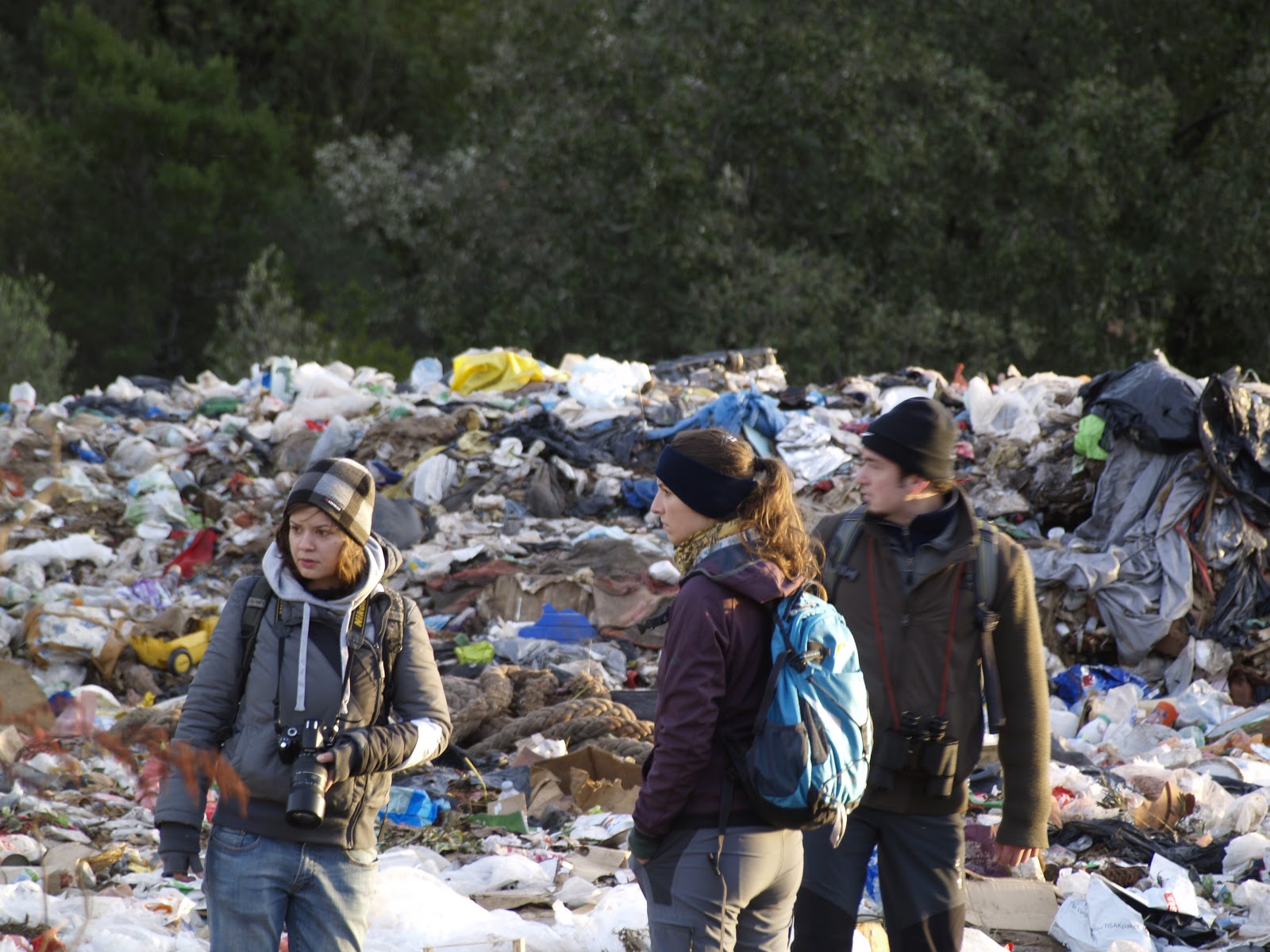
The golden jackal seems to be human dependent and here, near a village with a bad managed waste dump inside Peljesac Peninsula,  we were able to record more than 18 individuals simultaneously with Giannatos technique of bio-acoustic stimulation. Also a common pheasant Phasianus colchicus, was seen in this environment during this "concert". This event let us suggest that predation on this game ground nesting bird species by jackals is not so aggressive as is suggested for its other competitor, red fox (Draycott et al, 2008).

Silence on the blue lagoon

Looking for key species

Seems that we found them

Photo and video trapping is essential as direct method

A spider treats ignorance and controls all data. Lejla Colic

Specific habitat (1)

Not jackal footprint

Specific trail
Golden jackal footprint

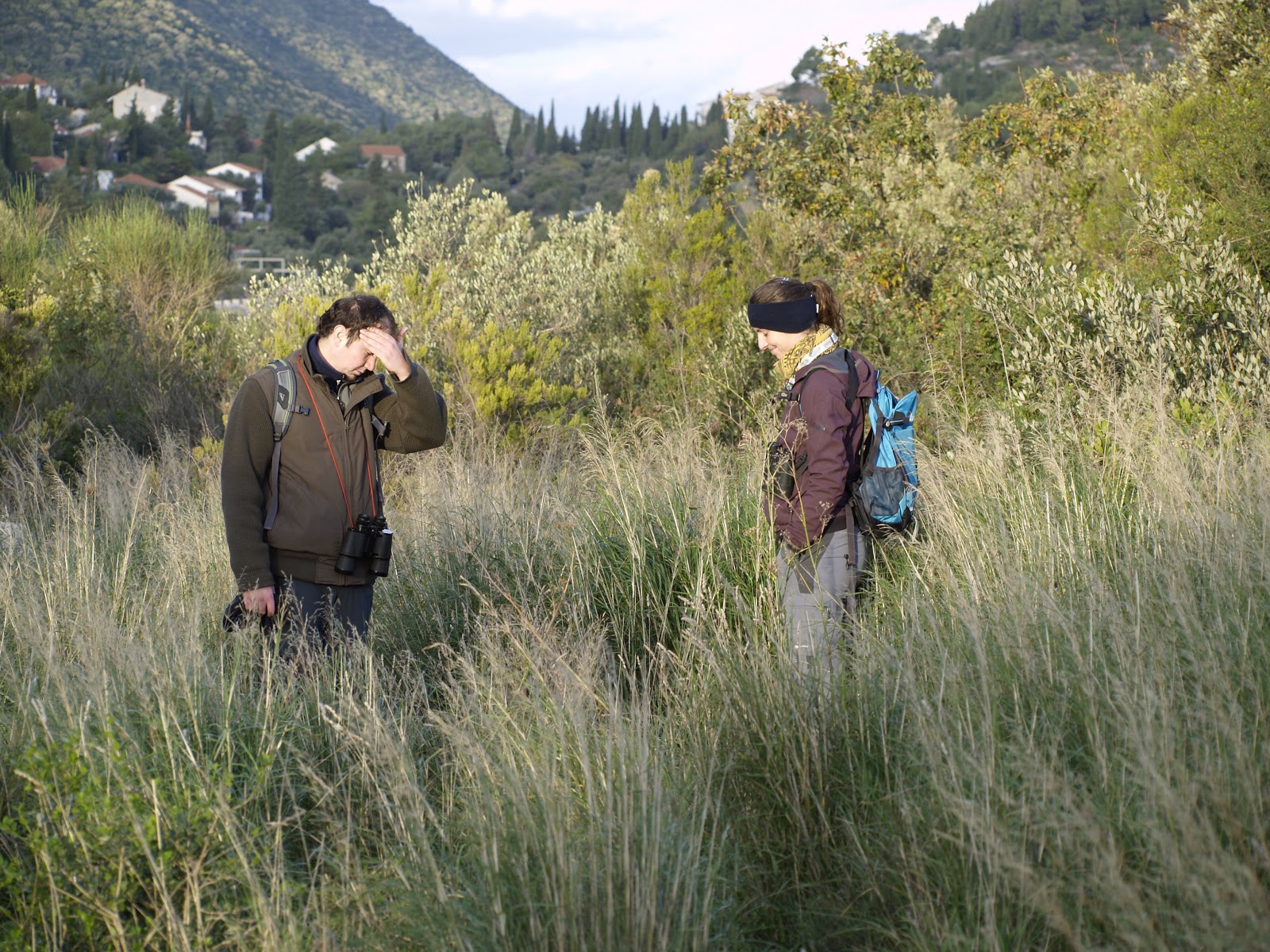
Fieldwork

Beside localizing more than 20 reproductive groups of jackals, the members of jackal survey team were able to identify dormouse (Glis glis), Eagle Owl (Bubo bubo) and red fox (Vulpes vulpes). 
The beautiful calcareous landscape and Mediterranean vegetation above the blue sky and with the blue waters of the Adriatic Sea surrounding us and the wonderful people ambiance and hospitality from Zuljana got us awake trough all night, and so, we could  feel better the jackal ecological systems painted with their musical howls.
Hunting is a common activity in Peljesac

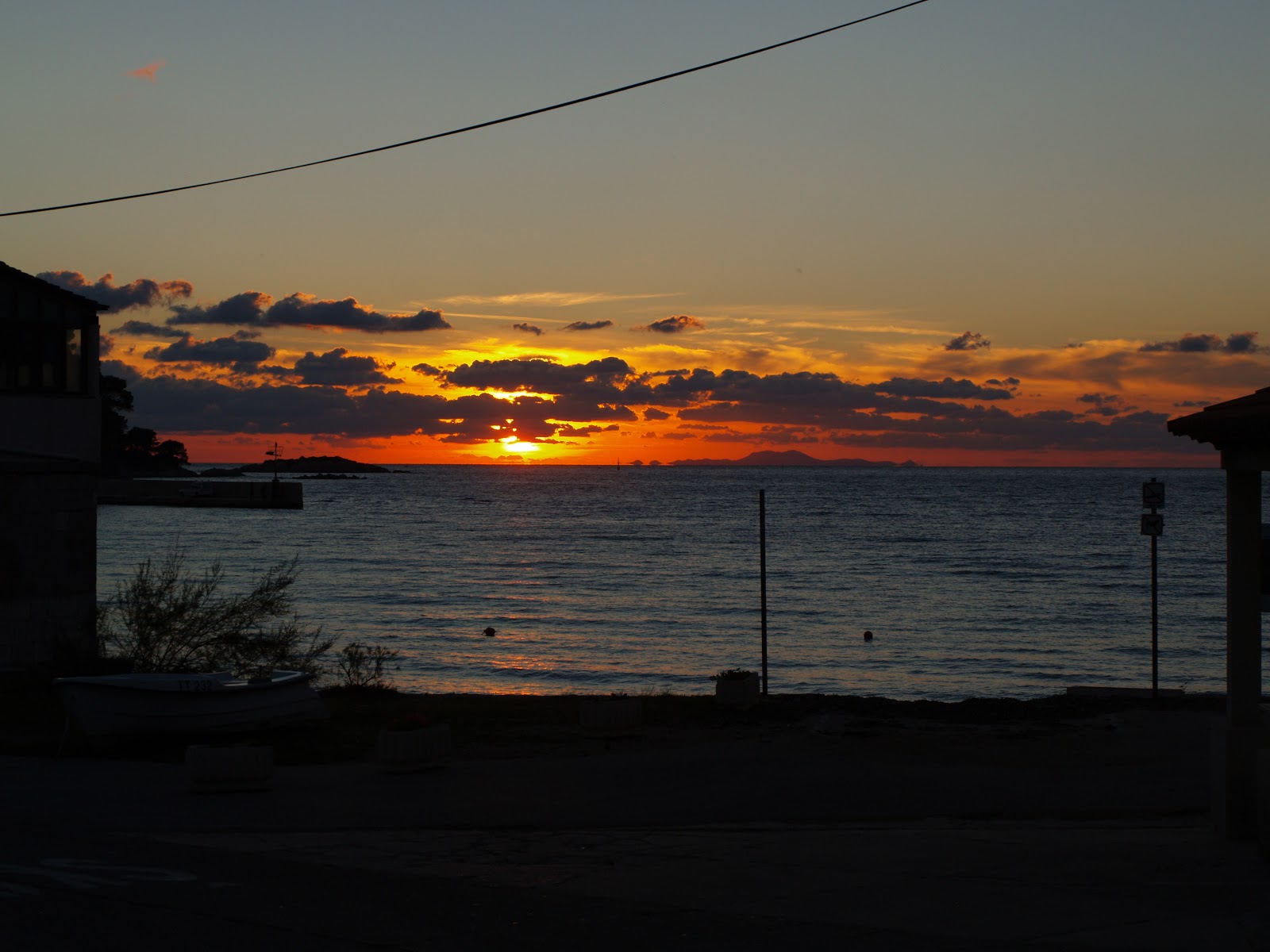
Before fieldwork, sunset at Zuljana our wonderful base camp

Ivan Budinski(BIOM NGO) shows us how lichens do not grow where animals mark. Below the cement protection on curve to the continental part of the Peninsula at about 600 meters altitude a lot of droppings (mustelids, carnivores, raptor birds) can be easy seen and are a good encyclopaedic, visual compendium. Photo: Ovidiu Banea

The corner is giving us the most important data.
Glis glis Photo: O. Banea

Sus scrofa on the road

Preparing the fieldwork in Zuljana, on the left Ivana, Miha and Ivan: to the right Mateja, Jasna and Tomaz are understanding everything behind the message.

Possible footprint of Canis aureus in Peljesac

Following the jackal path

We are not jackals but we want understand their movements

Specific habitat (2)


Droppings

Lynx Miha

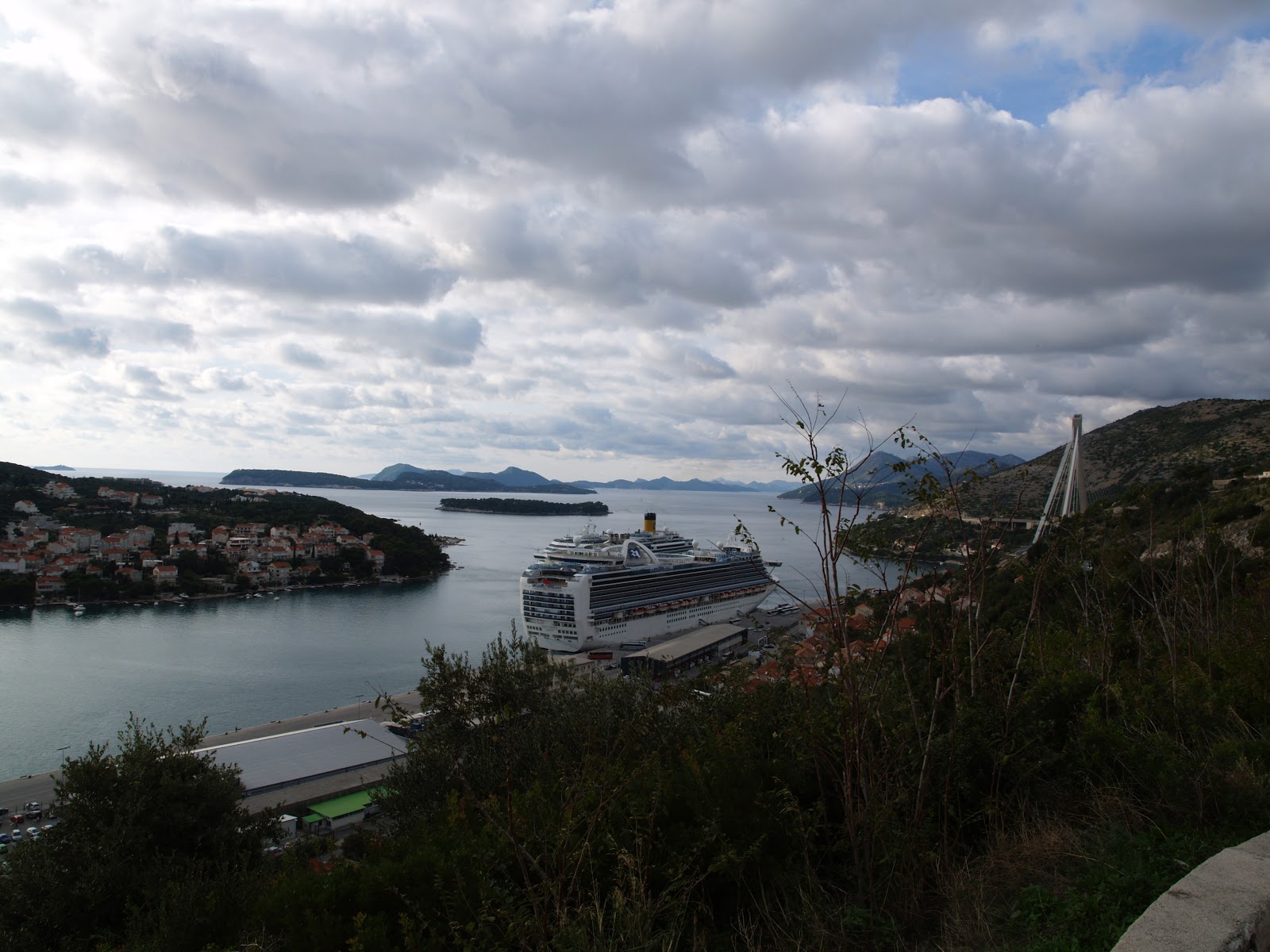
During the day we went to Dubrovnik, the islands are still without anthropogenic touch. 


One of several stops. In fact, not time schedule is need for jackal surveys.

Dubrovnik

Sunset in Dubrovnik

Miha Krofel and Ivana Selanec

Raj 2012 team starts for day fieldwork

Stomach collected from a young female road-killed. 
Ivana's team did recognition of the specimen at the place in Northern Part of the Peninsula.


It had 75% vegetable (60% Graminae, scrub leaves and 15% grapes), 20% meat (fat meat probable dropped by inhabitants or hunters) and 5% unknown material (Analysis in presence of Miha Krofel and Jasna Mladenovic)

Dump near Trpanj

The dump where yesterday were reported 6 groups of jackals if we think in this, but probably here the families are disorganized and no territoriality is respected. Yesterday morning we heard more than 16 jackals here. 

Slovenian new GOJAGE: Jasna, Mateja and Tomaz.

Ivan Budinski helps to identification of vegetable in an excrement. This time seems that jackal dropp has more than 50% Oleaceae sp.

Mateja and Tomaz found the treasure.


More than ten droppings, all seem to belong to jackal species.

Not all is Oleaceae and grapes, this time jackal ate a plastic bag, Ivan suggested that could be a bag with some meat, we are in the same area of the dump near Trpanj.


Venice, 12.11.2012. The way back from Peljesac Peninsula we did through beautiful landscape of Croatia, from Dubrovnik to Zagreb following the auto-route, then Ljubljana. From Ljubljana to Venice, the road had a lot of works near Nova Goriza and weather was not so good. Today the news was that in Venice since 1872, this was the 6th highest (149cm) marea.

The flight was lost and another flight was available from Treviso. To here, Hermes (a driver of a private cab) was the elected to be ambassador of sciacallo dorato (just coincidence).

The weather is better today.

Thinking in Dubrovnik

During the fieldwork. Photo: Miha Krofel